“Collecting and organizing human and non human objects within architectural and urban space has been key to effective control of colonial territories”. Daniel Nemser, Infrastructures of Race.
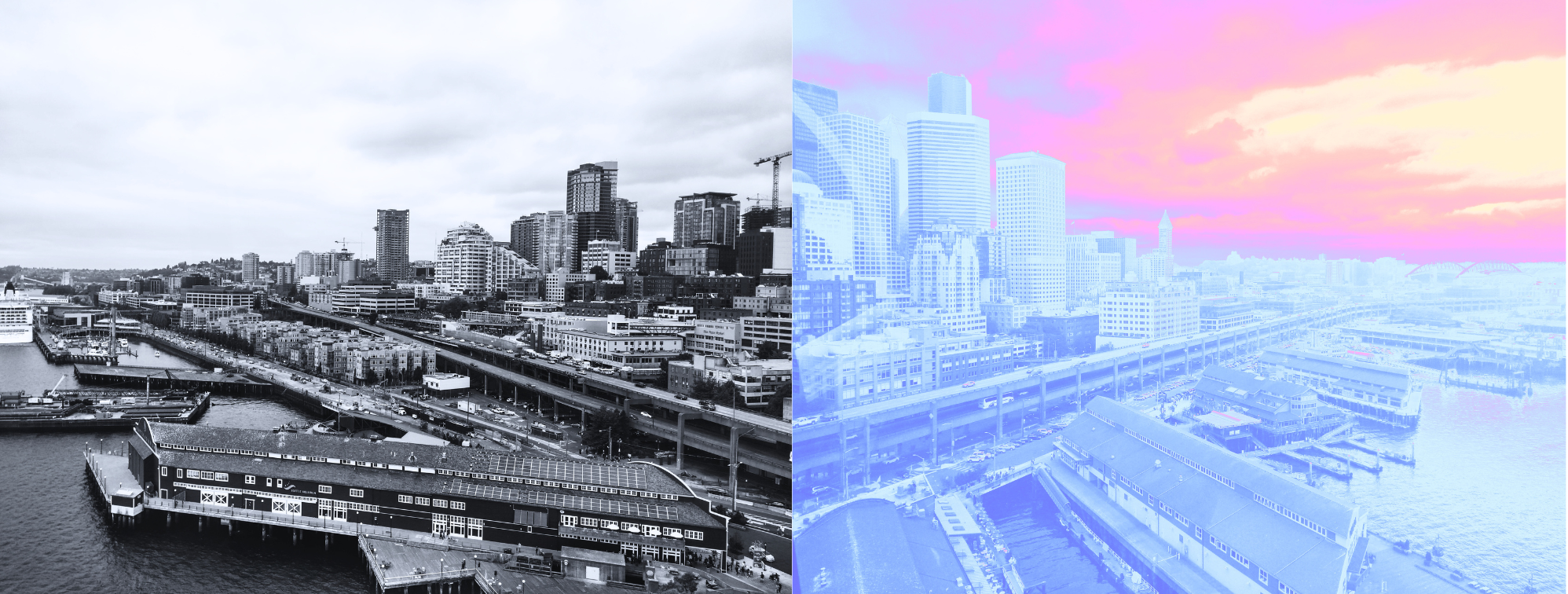
One of the primary techniques of production of colonial space with the goal of controlling and governing in the Americas. This policy forcibly resettled Indigenous communities into centralized towns to be withing reach and under the gaze of colonial authorities.
concentration
urbanization
Modification of land to create “modern”, western, urban cities as part of the process of colonization and modernization of a territory. It requires the modification of the land to a point that is no longer recognizable from how it was before colonization. It is harmful to the land and the people living in it. It’s a form of ecocide.
There is no such thing as sustainable or beneficial urbanization, because urbanization equals death.
assimilation
Forcing Indigenous peoples to acquire european and western ways of living is assimilation, even if colonizers referred to it as civilization.
Improvement of the land: the narrative that justified dispossession
At the beginning, the improvement of the land was mainly with an agricultural lens, then it evolved to include industrialization and urbanization.
The narrative to acquire the support of the public and the crown for colonization of what is now united states of america was the improvement of the land. The land was spoken about, treated, planned and seen, as if it was unused, not worked, underdeveloped, not reaching its potential, and forgotten. This narrative was needed because it was well known this territory was occupied by Indigenous Peoples; so they needed a legitimizing reason that could be a loophole in the english public’s eye and consciousness to colonize.
“Although the early colonists remarked on gardens and well-kept forests, they also maintained that the Natives weren’t really using the land, or at least we weren’t using it ‘properly’. It is never a matter of whether the land is being used. It is how and who that matter, that prioritize one set of uses over all others and give one group the right to push aside another. Colonists believed their rights derived from a superior lineage, and their entitlement to land relied on their beliefs about how and who of land use.” Patty Krawec, Anishnaabe writer in Becoming Kin. Pages 45 & 46.
Patty Krawec is not the only Indigenous writer to highlight how the colonists deemed inferior, sometimes nonexistent, the Indigenous ways of working the land. Most modern scholars still replicate this narrative, and talk about how the landscape in what is now united states was undisturbed by Indigenous peoples, implicitly suggesting that they did not manipulate (work) the landscape. I argue that this invisibility of Indigenous Peoples' ways of working the land is based on the fact that settlers and colonists see the land as a commodity; therefore, working the land, for them, meant exploiting the land, with disregard on the impacts on the land itself.
Indigenous Peoples, in the majority, see land as a relative and have a relationship of reciprocity with it, so when they work the land, they do it in a way to tend and care for it as well. Most Indigenous Peoples only take what is necessary to live, never more. The use of the land is for subsistence, and profit was never a part of their goals. Therefore, europeans were expecting to see unsustainable and exploitable ways of working the land, which they could not find, resulting in the dismissal and erasure of Indigenous ways to work the land.
Indigenous Peoples mobility has always been part of the way they live, occupy, work, and tend for the land. Many tribes and groups moved around seasonally within a geographic area to be closer to food resources during winter, let the soil rest, go to a place where the seasonal weather was easier to navigate, and many other reasons. The way they occupied the land did not always look the way english settlers understood the occupation of a territory, since it was not “permanent” but rather mobile.
The stealing of lands from Indigenous Peoples with the excuse of improving it served as a way to increase the territory as part of their imperialist colonial project of the formation of the nation-state called the united states. This colonial project required the establishment of a system of private property, which functioned to assimilate Indigenous Peoples. Assimilation through land improvement by forcing Indigenous Peoples to occupy, possess, live, and work the land in ways that european settles deemed as appropriate; forcing them to abandon their ways to survive.
Stealing of Indigenous land; displacement; establishment of the private property system; reorganization of territories; modernization; industrialization; exploitation of the land and urbanization. The process of colonization was made possible by planning, architecture, design, cartography, and lawfare.
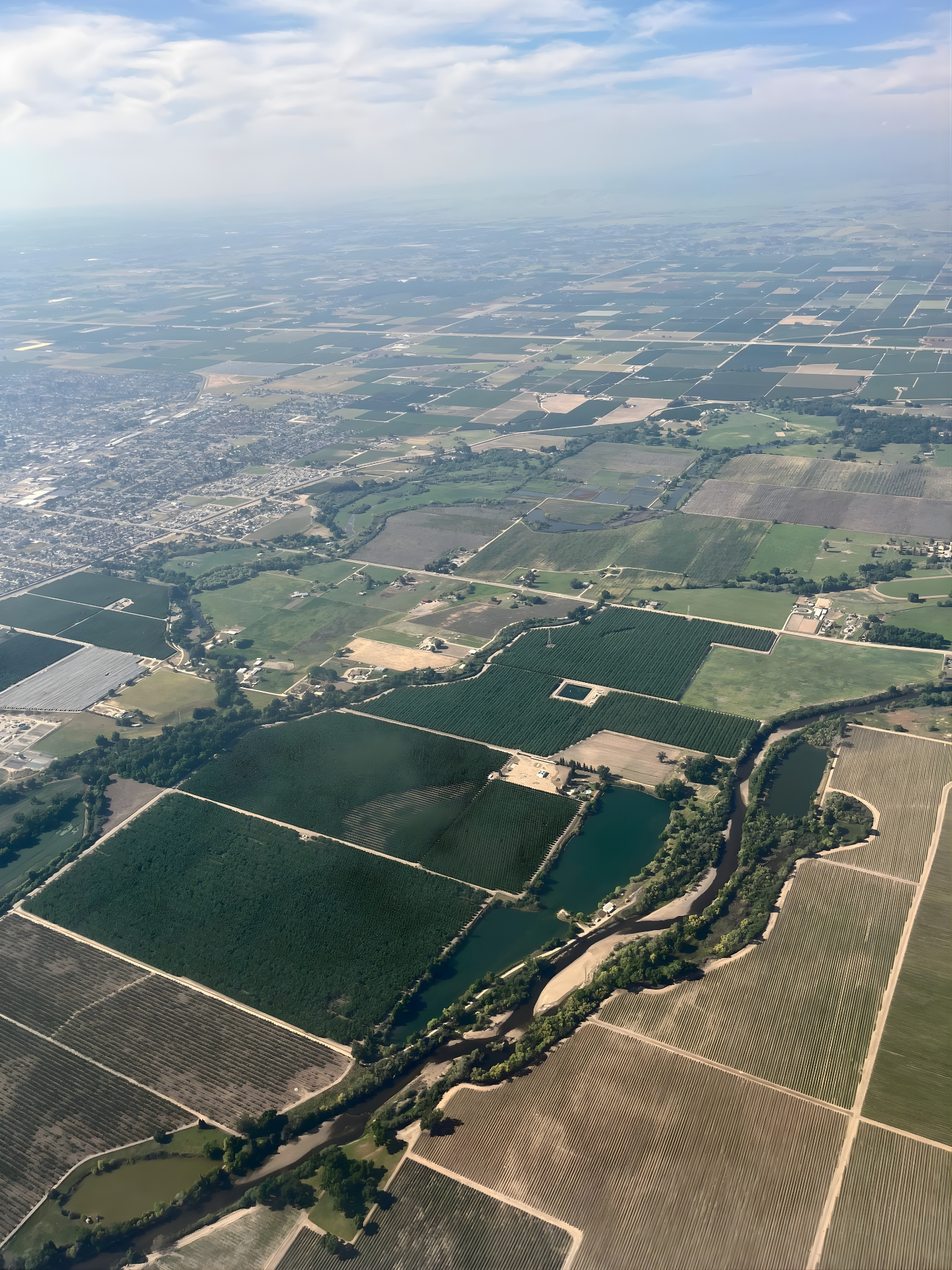
reorganization of territories; modernization; industrialization; exploitation of the land and urbanization
The centralized towns were designed and constructed in a geometric grid pattern, this pattern produced simultaneously homogeneous and fragmented spaces were Indigenous Peoples that were forcibly displaced and relocated lived in along white settlers.
Congregations and grids are connected. Congregations were a creation of colonial space that was legible, the grid was the tool that allowed to represent these colonial spaces cartographically, and to bring it to life, and materialize it.
The grid allows easy measurement, classification, division and apportionment of space. This specific design and reorganization is chosen by settlers because it enables extraction, exchange, accumulation, and of course, surveillance and control.
The grid homogenizes terrains and spaces and at the same time fragments because Indigenous life was reorganized and reconfigured according to norms that settlers established for this new urban spaces.
planning has not only been about controlling territory and land; it has also successfully served to control the bodies of the oppressed, assimilate Indigenous Peoples into western ways of living while parallelly avoiding upraises against the new regimen, and imposing white supremacy.
“The Spaniards who had invaded Mexico and Peru when confronted with the magnificence and beauty of Incan and Mexican architecture, the invaders allowed themselves a moment of awe and admiration and then set out to dismantle the buildings and put their stones to a more urgent, pragmatic use: the construction of their own palaces and Catholic churches. ”