Colonization&Space

Can planning be decolonized?
This course is born searching the answer to this question. This course presents how planning has been the primary tool for colonization with the aid of architecture, design, and cartography. It is directed to students of interior design, landscape design and architecture, urban planning, cartography, and law. The course culminates with a final project where students elaborate an answer to the question in place through an essay.
Main Topics:
Settler colonialism: invasion is a structure, not an event
Assimilation through design
Urbanization = Death: infrastructure for control, resource extraction, and human exploitation.
Imagining other futures.
In this chapter, we explore imagination as a tool for decolonization and regenerative change; we study and read about alternative realities that already exist, like other types of land tenure, housing, and justice systems. We collectively explore what the future could look like.
subtopics:
Frameworks that justified colonization: lockean Property Theory, Terra Nullis, Doctrine of discovery, Manifest destiny, Civilizing Missions, Social darwinism, Modernization and Development.
Architecture and urban design turning colonial legal frameworks into spatial realities.
Inner colonization in Europe: blueprint experiments for overseas empire-building.
The triad tools of colonization: law, architecture, and design.
Translating power dynamics into physical structures: enforcing hierarchies, imposition of gender roles, and dehumanization.
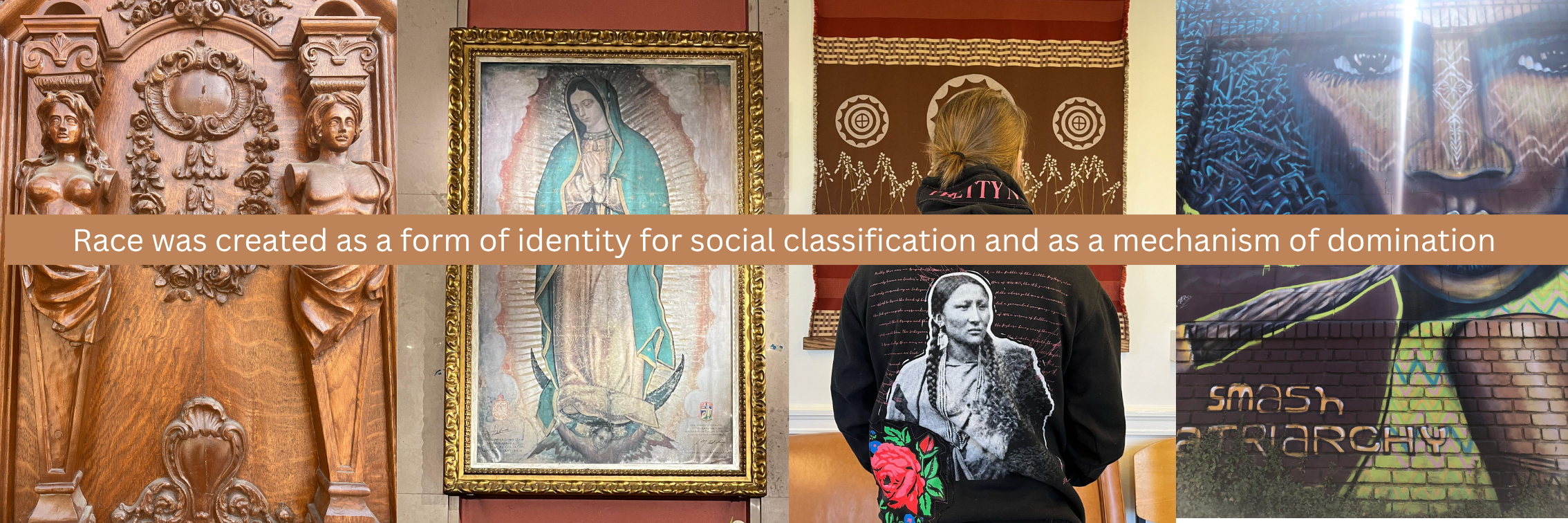
Racialization as politics of space and the myth of mestizaje.
Reorganization of territories: congregations and grids.
Landscape Architecture for surveillance, spatial control, and movement restriction.
Commodification of the land, property enforcement, and the creation of a working class.
Slavery and design: ergonomic of labor exploitation.
Cartography: the tool for Toponymic Erasure
Concept examples:
Concentration: One of the primary techniques of production of colonial space, a policy for forcibly resettling Indigenous communities into centralized towns to be withing reach and under the gaze of colonial authorities.

Urbanization: A form of ecocide. Modification of land to create “modern”, western, urban cities to a point that land is no longer recognizable from how it was before. Part of the process of colonization and development.

Assimilation: Forcing Indigenous Peoples to acquire european and western ways of living, often referred to by colonizers as civilization.

Infrastructures of race: material systems that enable racial categories to be thought, ascribed, and lived.
The result of a system of domination that, vampire-like, extracts the life of some in order to make others live better.
- Gary Fields and Ruth Wilson Gilmore.

A tribe’s traditional lands represent ‘everything most sacred to Indian society. Therefore, this is the first step to be taken in the process of civilizing them”
Frederick E. Hoaxie,
“A final promise: The Campaign to assimilate the Indians 1990-1920.”